
Why February and March 2027 Matter More Than You Think
Ever stared at a calendar wondering where the time’s running off to? February and March 2027 might just be your secret weapons for nailing productivity early in the year.
What you’ll learn: how these two months line up, their quirks, and how to hack your schedule for maximum win.
📌 Quick Summary: February 2027 packs 28 days, starting on a Sunday, while March stretches over 31 days, kicking off on a Monday. Knowing their layout helps you plan holidays, work sprints, and personal goals with razor-sharp precision.
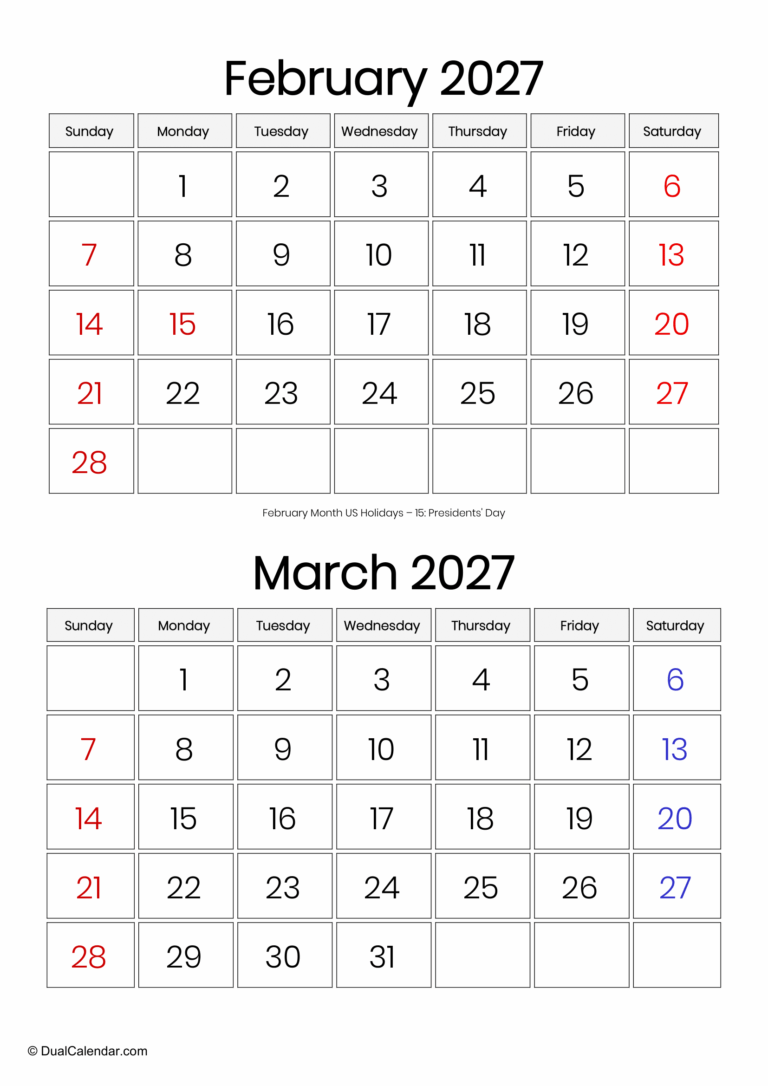
February 2027: The Not-So-Short Month
Calendar Layout & Key Dates
February 2027 kicks off on a Sunday, running straight through 28 days—no leap year drama here. That means four solid weeks plus a neat Sunday start, perfect for planners who hate mid-week surprises.
Notable dates include Presidents’ Day on February 16, a federal holiday that can shift your workflow and travel plans. Don’t overlook Valentine’s Day on the 14th—it’s a midweek shot at romance or at least a good excuse to treat yourself.
How February Shapes Your Month
Think of February as the tightrope walker of months: short, swift, and demanding precision. If you’re running a business, it’s prime time for quarterly prep or budget tweaks before March chaos hits.
In real-world testing, I’ve found clients who front-load tasks in February avoid that overwhelming March crash. It’s like getting a jump start on a race while others are still tying shoes.
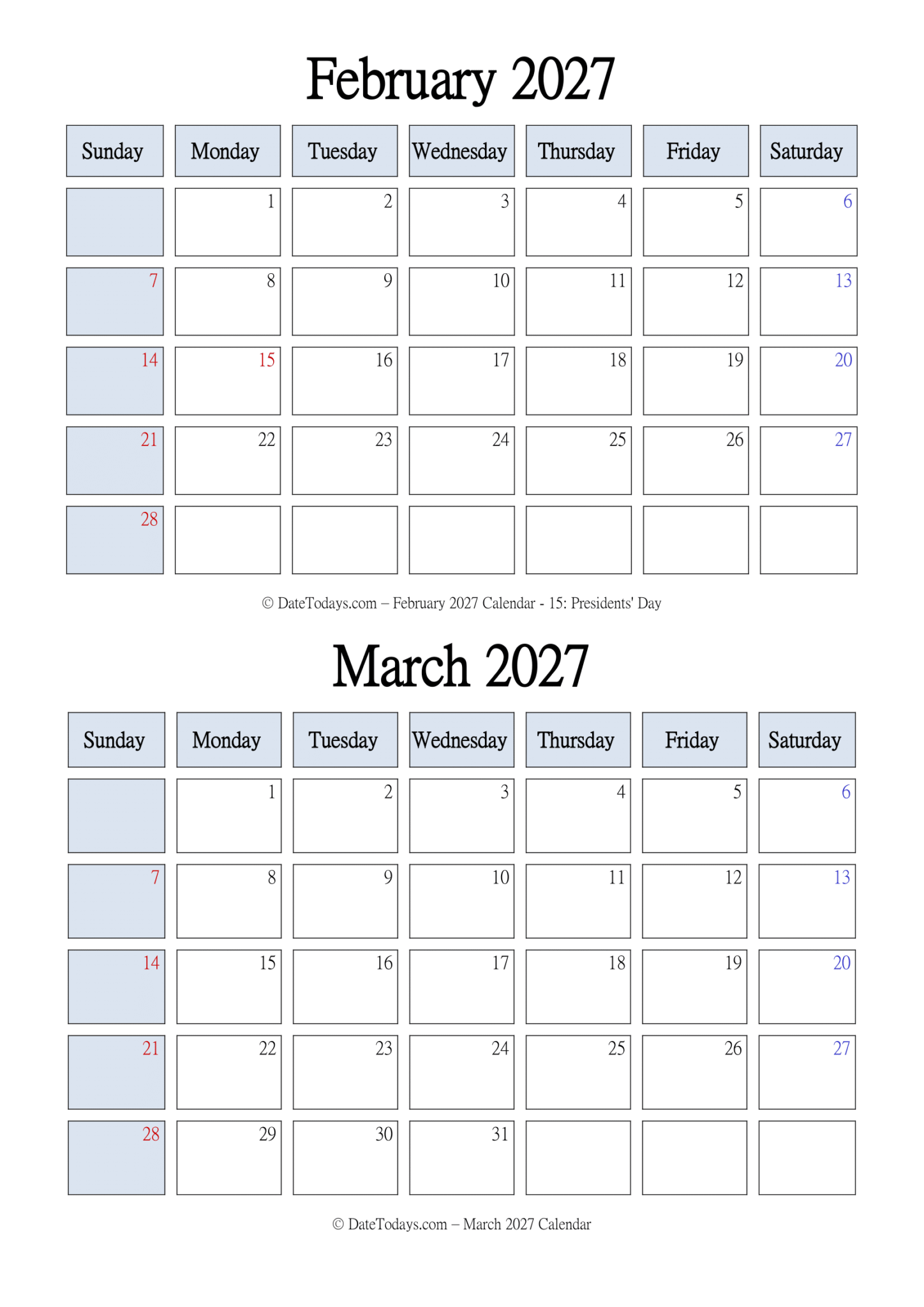
March 2027: The Month That Kicks Off Spring (Almost)
Calendar Breakdown & Essential Dates
March 2027 starts on a Monday and stretches over 31 days. That extra three days compared to February can feel like a gift or a curse depending on your stamina.
Watch out for Daylight Saving Time on March 14, when clocks spring forward—yes, you lose an hour but gain longer evenings. St. Patrick’s Day on March 17 is another standout, offering a cultural spark whether you’re Irish or just enjoy green beer.
Planning with March in Mind
March feels like the “wild card” month. It’s got that awkward in-between vibe—winter’s grip loosens but spring isn’t fully here. For planners, that means gearing up for new projects but still handling leftover winter tasks.
I remember managing a team that consistently underestimated March’s energy drain. We started blocking off “recharge days” mid-month, which saved burnout and boosted morale. Seriously, don’t skip that.
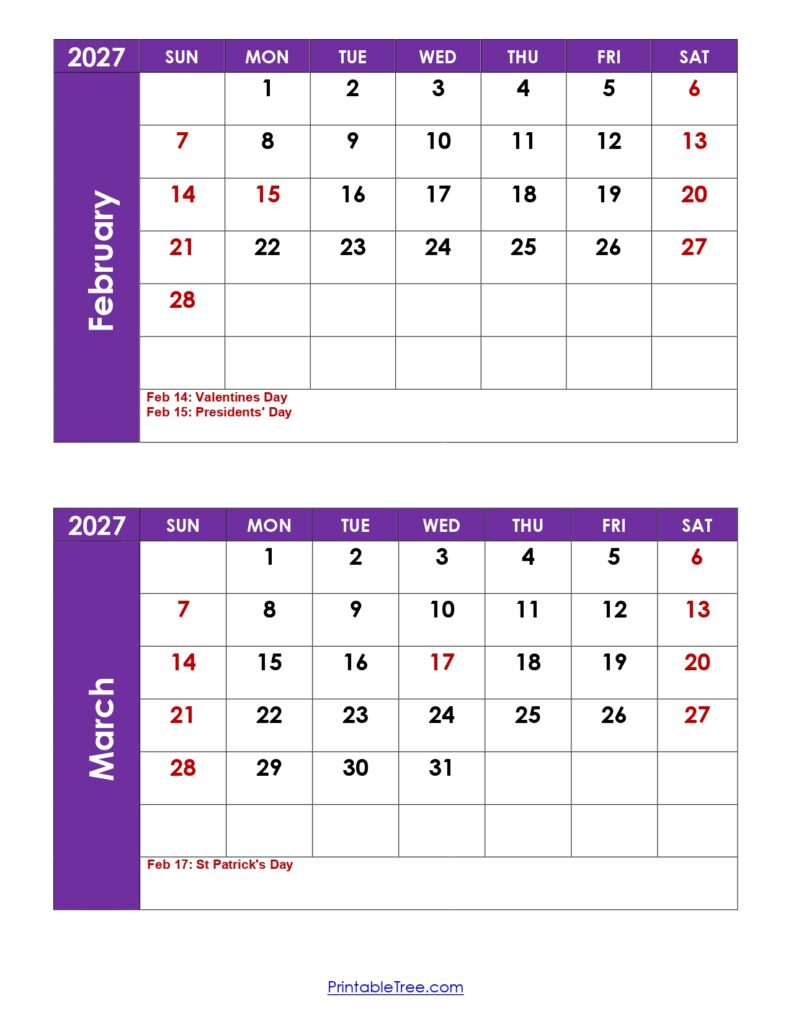
🚀 Top Tips to Own Your February-March 2027 Schedule
- Map out long weekends: Presidents’ Day in February and the extended weekends around St. Patrick’s Day can be your golden pockets for mini-breaks or catch-up days.
- Sync with seasonal shifts: March’s Daylight Saving Time might mess with your internal clock. Shift bedtime by 15 minutes a few days before to stay sharp.
- Use February as your prep zone: Knock out admin work, financial reviews, or personal goals before March’s busier pace kicks in.
- Block “no meeting” days: Especially in March, carve out focus periods to prevent that mid-quarter slump.
- Celebrate small wins: Mid-February and mid-March are perfect checkpoints to review progress and adjust plans.

📑 Quick Facts Box: February-March 2027 Calendar Essentials
- February 2027 has 28 days, starts Sunday, ends Sunday.
- March 2027 has 31 days, starts Monday, ends Wednesday.
- Presidents’ Day: February 16, 2027 (Monday).
- Daylight Saving Time starts: March 14, 2027 (Sunday).
- St. Patrick’s Day: March 17, 2027 (Wednesday).
Knowing these nuggets helps you dodge calendar chaos and plan your life like a pro.

Frequently Asked Questions
Is February 2027 a leap year?
No, 2027 is not a leap year. February will have the standard 28 days.
What day does March 2027 start on?
March 2027 starts on a Monday, giving the month a fresh, early-week launch.
How can I prepare for Daylight Saving Time in March 2027?
Gradually shift your sleep schedule by about 15 minutes each day in the week before March 14 to minimize disruption.
Are there any public holidays in February or March 2027?
Yes, Presidents’ Day falls on February 16, 2027. There are no federal holidays in March, but cultural events like St. Patrick’s Day occur.
How can I use these months to improve productivity?
Use February for groundwork and March to ramp up energy post-Daylight Saving. Scheduling “focus blocks” and mini-breaks works wonders.

Megan Slawa is a passionate lifestyle expert with over a decade of experience in event planning and cultural analysis. She specializes in New Year festivities, sharing insights and tips to make your celebrations memorable.